
Municipal Collection Services
Utility and public-sector debt collection for cities, counties and utilities. Headquartered in Wichita, Kansas since 1970.
- No recovery, no fee
- Licensed where required
- HIPAA compliant
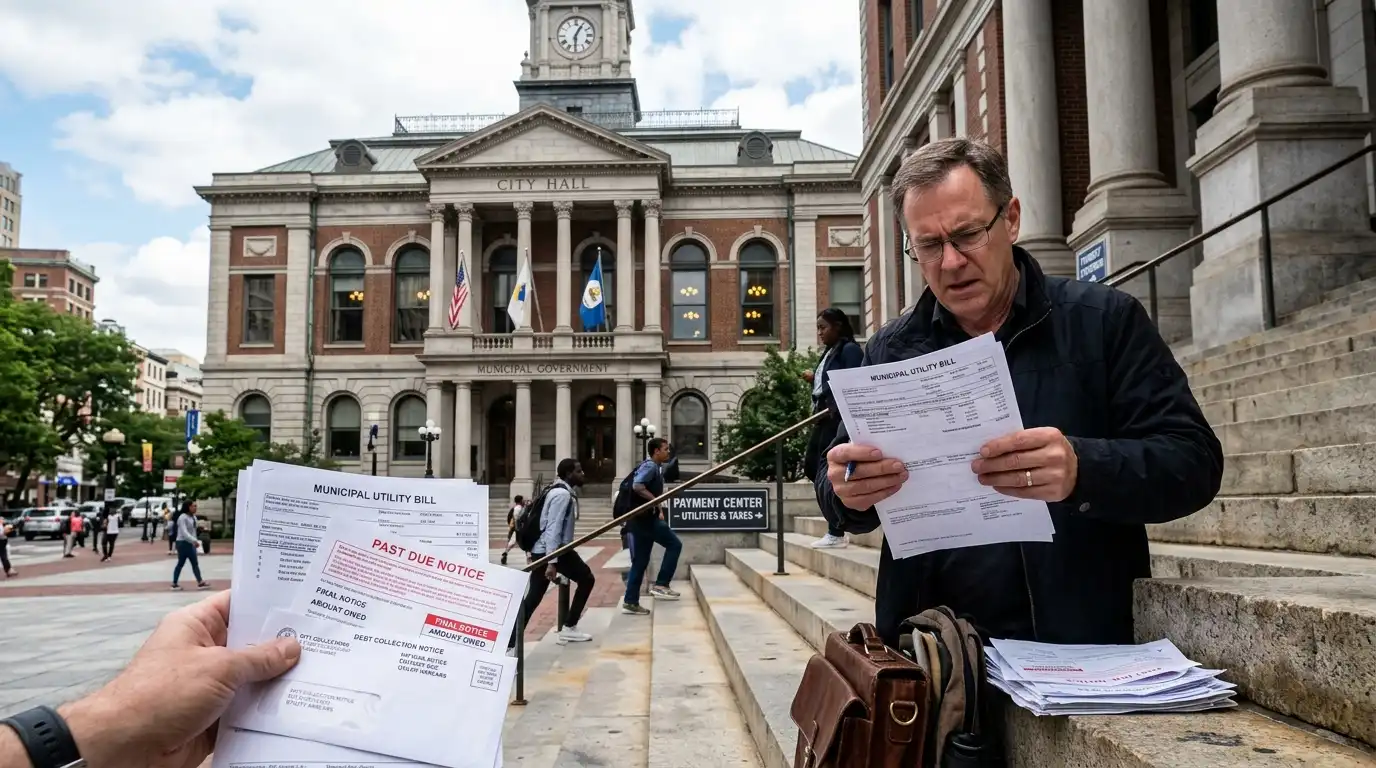
Midwest Service Bureau, headquartered in Wichita, Kansas, has collected for clients since 1970. For cities, counties, utilities and other public bodies, we collect delinquent utility bills and other public-sector receivables nationwide, on a contingency basis: no recovery, no fee. Midwest Service Bureau, LLC (MSB) of Wichita, Kansas is not affiliated with Municipal Services Bureau, a Texas company.
Collections run under MSB's FDCPA, Regulation F, FCRA and HIPAA compliance program. MSB is licensed where required (NMLS 2671949; California 11599-99; New York City DCWP 2124316) and holds an A+ rating from the BBB, accredited since 2016.
Municipal & Utility Accounts We Collect
- Water and sewer bills
- Electric and gas utility bills
- Other city and county receivables
How a Municipal Placement Works
Onboarding typically completes within five business days. To place accounts, a city or utility typically sends:
- the account ledger, with balances and last-payment dates
- the service address and the customer's last known contact details
- shut-off or final-bill history for each account
- the ordinance or board resolution that authorizes the placement, where one is required
Accounts are worked by phone, letter, email and text within Regulation F contact limits. Residents can pay online at www.msb-bill.com or by calling (800) 362-0272. The client portal shows account status and payment history for every placed account.
Pricing
Contingency placements: you pay only when we collect. There are no setup fees and no monthly minimums. Flat-fee and hybrid pricing is available for early-out and first-party programs.
Utility Collection Rules by State: Kansas, Missouri and Florida
Utility and municipal accounts are governed by state law as well as the FDCPA. A few of the rules that apply in Kansas, Missouri and Florida (general information, not legal advice):
Kansas
- Lawsuit deadlines: generally five years for written contracts (K.S.A. 60-511) and three years for oral or implied contracts (K.S.A. 60-512). After the deadline, a debt may still be owed but cannot be enforced by lawsuit.
- State setoff: Kansas runs a setoff program, administered by the Department of Administration, that can apply state payments such as tax refunds to debts owed to the state and participating municipalities (K.S.A. 75-6201 et seq.).
The Kansas utility lien (K.S.A. 12-808c). When a customer using property served by a municipal utility does not pay, the unpaid fees and charges become a lien on that property; the governing body certifies the amount to the county clerk, and it is placed on the tax roll and collected like other taxes (K.S.A. 12-808c(a)). The lien does not attach when a tenant, not the landlord or owner, contracted for the service (K.S.A. 12-808c(b)). Tenant-contracted accounts therefore fall outside the tax-roll route and need another one, such as a collection placement; which route fits an account is a decision for the city and its attorney (K.S.A. 12-808c).
Missouri
- Utility jurisdiction: the Missouri PSC regulates rates and service for covered investor-owned utilities. Municipal systems generally fall outside its rate-setting jurisdiction, so the utility type, tariff and local ordinance decide which billing and disconnection rules apply (Missouri PSC: utilities it regulates).
- Lawsuit deadlines: Missouri does not have one deadline for every medical or utility account. Section 516.120 generally provides five years for covered contract or obligation claims; §516.110 provides ten years for specified writings for the payment of money. The agreement, claim, accrual date, and any tolling or later acknowledgment must be evaluated before a lawsuit. (Missouri §516.120; Missouri §516.110)
- Municipal fines and fees: Missouri caps at 20% the share of a municipality's general operating revenue that may come from fines, bond forfeitures and court costs for minor traffic and municipal ordinance violations (§479.359 RSMo).
Florida
- New tenants: a municipality may not refuse or discontinue utility, water or sewer service to a rental unit's owner, tenant or prospective tenant because a former occupant did not pay (Fla. Stat. § 180.135).
- Lawsuit deadlines: generally five years for written contracts and four years for obligations not founded on a written instrument, such as many open utility accounts (Fla. Stat. § 95.11(2)(b) and (3)(j)).
Founded in Wichita in 1970
Midwest Service Bureau was founded in Wichita, Kansas in 1970 and is headquartered at 625 W Maple St, Wichita. MSB collects nationwide and is licensed where required (NMLS 2671949). Questions about a placement? Call (800) 362-0272.
FAQ
Frequently Asked Questions
Collections run under MSB's FDCPA, Regulation F, FCRA and HIPAA compliance program, and MSB is licensed where required (NMLS 2671949).
Each contact explains what is owed and the options to resolve it, including payment plans, within Regulation F contact limits. Residents can pay online at www.msb-bill.com or call (800) 362-0272.
Delinquent water, sewer, electric and gas bills and other receivables owed to cities, counties and public utilities, nationwide.
Contingency placements: you pay only when we collect. There are no setup fees and no monthly minimums; flat-fee and hybrid pricing is available for early-out and first-party programs.
The client portal shows account status and payment history for every placed account.
For owner-contracted service, K.S.A. 12-808c lets the governing body certify unpaid utility charges to the county clerk for the tax roll. The lien does not attach when a tenant contracted for the service, so those accounts need another route, such as a collection placement.
Ready to Get Started?
Contact us for a free consultation. We will review your current collection process and explain how a placement with MSB works.
Related Industries We Serve
Explore our specialized collection services for other industries