
Medical & Healthcare Debt Collection Agency
MSB is a trusted collection agency with over 55 years of experience in HIPAA-compliant healthcare debt recovery for hospitals, health systems, and physician groups.
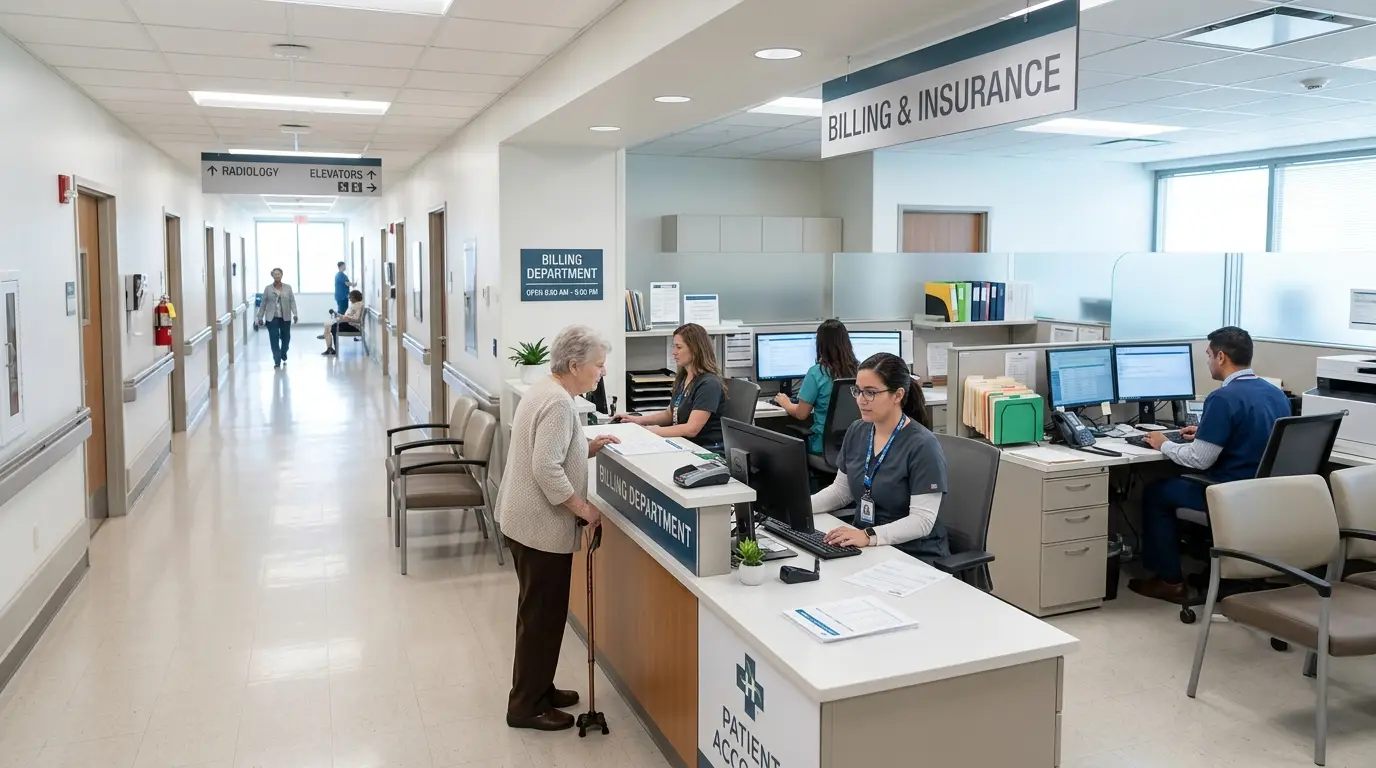
MSB has over 55 years of experience in medical debt recovery. We are a nationwide collection agency that focuses exclusively on healthcare collections. We serve hospitals, clinics, private practices, and various medical groups, helping them recover unpaid patient balances with professionalism and precision.
We understand the challenges healthcare providers face. These include higher self-pay accounts, complex billing systems, insurance delays, and strict regulations. Our proven debt collection methods support your revenue cycle without affecting patient care.
MSB is fully compliant with all standards, including HIPAA, FDCPA, CFPB, and state regulations. We handle every account ethically, securely, and with full respect for patient privacy. Our patient-first approach uses respectful communication to maintain positive patient relationships while improving recovery rates.
Our technology includes predictive analytics, real-time insurance verification APIs, and AI coverage checks that minimize claim denials and payment delays. We also assist with out-of-network claims.
What sets MSB apart is specialization depth. Our collectors understand CPT and ICD-10 coding, interpret EOB statements from major payers, and navigate HIPAA, the No Surprises Act, state balance billing protections, and 501(r) financial assistance screening for tax-exempt hospitals.
Medical Debt Collection Agency
The right medical debt collection agency means the difference between recovered revenue and permanent write-offs. MSB specializes in healthcare collections — not as a sideline, but as our core focus. Medical debt requires HIPAA expertise, sensitivity, No Surprises Act compliance, and deep understanding of high-deductible self-pay balances.
Our collectors are trained in billing terminology, EOB interpretation, and patient financial counseling. When patients dispute a balance, our team walks them through their EOB and helps them understand their responsibility — building trust that leads to payment arrangements.
We serve hospitals, physician groups, dental practices, urgent care centers, behavioral health providers, surgery centers, home health agencies, and specialty clinics. Each segment has different balance profiles and regulatory nuances, and MSB adjusts accordingly.
The stakes are real: bad debt write-offs consume 3–5% of patient service revenue at many hospitals. Our healthcare clients consistently report that MSB's recovery rates exceed their previous vendor by 15–27%, directly improving operating margins.
How MSB Puts Your Patients First
At MSB, "patient-first" means every contact begins with an offer to help — not a demand. Our collectors identify patients who may qualify for financial assistance, Medicaid, or charity care before pursuing the balance. For 501(r) hospitals, this screening is built directly into our workflow.
Patients can resolve balances through phone, SMS, written correspondence, or our secure online portal. We offer interest-free installment plans, hardship accommodations, and prompt-pay incentives where your policies allow.
The majority of patients contacted by MSB describe the experience as professional and respectful. That protects your HCAHPS scores, your reputation, and your patient relationships — while still recovering the revenue you need.
MSB's Commitment to Your Practice
Every client receives a dedicated account manager who understands your billing workflow, patient population, and collection policies — a single point of contact for questions, escalations, and reviews.
MSB integrates directly with your EHR to eliminate manual placement and auto-post payments. We support Epic, Cerner (Oracle Health), MEDITECH, athenahealth, NextGen, eClinicalWorks, and dozens more. Integration typically takes two to three weeks.
Our client portal provides real-time visibility into every account — contact attempts, payment status, disputes, and performance metrics. Custom reports by provider, location, payer type, or account age let you benchmark MSB against other vendors easily.
Beyond reporting, our monthly analytics highlight upstream patterns: common denial reasons, documentation gaps, and seasonal trends. Clients use these insights to improve registration, coding, and billing — reducing accounts that need third-party collection in the first place.
Debt Collection Services With 55+ Years of Experience
Since 1970, Midwest Service Bureau has been recovering medical debt for healthcare providers across the United States. Our longevity in this industry is not an accident — it reflects a consistent commitment to ethical practices, regulatory compliance, and measurable results that keep clients coming back decade after decade. Our 93% client retention rate speaks to the relationships we build and the outcomes we deliver.
Over 55 years, we have navigated every major regulatory change in healthcare collections: the original FDCPA, HIPAA's privacy and security rules, the CFPB's creation and subsequent Regulation F, the No Surprises Act, and dozens of state-level consumer protection laws. Each change required operational adaptation, compliance investment, and staff retraining — and MSB has absorbed every one without missing a beat. When the next regulatory shift comes, our clients know we will be ready.
Our experience also translates to institutional knowledge that newer agencies simply do not possess. We understand how different patient populations respond to outreach, which communication channels produce the best right-party contact rates for different demographics, and how to structure payment plans that patients actually complete. That knowledge — built over millions of patient interactions across five decades — is embedded in our training, our technology, and the daily judgment our collectors exercise on your behalf. Explore our full range of collection services or request a portfolio analysis to see how MSB can improve your recovery rates.
Healthcare Collections by the Numbers
The scale of the healthcare collections challenge — and MSB's proven ability to address it
The healthcare collections landscape has shifted dramatically in recent years. Rising deductibles, increased patient cost-sharing, and the growth of high-deductible health plans (HDHPs) have made patient self-pay balances one of the largest sources of unpaid revenue for healthcare organizations. According to industry research, self-pay after insurance now represents 30-35% of hospital revenue — up from less than 10% two decades ago. At the same time, patients are increasingly struggling with medical debt, making compassionate and effective collection strategies more important than ever.
MSB's healthcare collections division has adapted to these shifts by investing in patient-centered communication, AI-driven scoring that identifies the right outreach approach for each patient, and financial counseling capabilities that connect patients with assistance programs. The result is higher recovery rates achieved through collaboration rather than confrontation — recovering what your organization is owed while treating patients with the dignity and respect they deserve. Our healthcare clients span the full continuum of care: large multi-hospital health systems, critical-access rural hospitals, multi-specialty physician groups, single-provider practices, ambulance and EMS services, behavioral health facilities, ambulatory surgery centers, and dental and veterinary practices. Each segment presents unique collection dynamics, and MSB brings specialized expertise to every one.
MSB's Healthcare Collections Process: Step by Step
Our healthcare collection process is designed for maximum recovery with minimum patient friction. Here's exactly how it works from account placement to final resolution:
1. Secure Account Placement & Data Validation
Healthcare clients place accounts through our secure portal, SFTP, or direct EHR integration. Upon receipt, our system validates patient demographics, verifies insurance information against our real-time coverage database, and checks for duplicate accounts or prior placements. Accounts with active insurance coverage are flagged for insurance follow-up before patient contact begins — recovering insurance dollars first and reducing the patient's out-of-pocket responsibility.
2. AI Scoring & Strategy Assignment
Every account is scored by our AI platform, which analyzes balance amount, account age, patient demographics, prior payment history, insurance payer, geographic factors, and dozens of additional data points to predict payment probability and assign the optimal collection strategy. High-probability accounts are routed for immediate personal contact, while lower-probability accounts may receive graduated letter campaigns or digital outreach sequences. The AI continuously learns from outcomes, improving scoring accuracy over time.
3. Patient-Centered Outreach
Our collectors initiate contact with empathy and a genuine desire to help. The first contact focuses on explaining the balance, answering questions about insurance coverage and EOBs, and identifying whether the patient qualifies for financial assistance programs. For early-out accounts, outreach is branded with your organization's name. Multi-channel outreach includes phone calls during optimal contact windows, personalized letters, email, SMS, and a secure self-service payment portal where patients can pay or set up payment plans at their convenience.
4. Financial Assistance Screening & Payment Resolution
Patients who express financial hardship are screened for Medicaid eligibility, charity care programs, hospital financial assistance policies, and sliding-scale payment options. This step is critical for 501(r)-compliant hospitals and ensures that patients who genuinely cannot pay are connected with resources rather than pursued for collection. For patients able to pay, we offer flexible payment plans, prompt-pay discounts (where authorized), and multiple payment methods including credit card, ACH, and online payments.
5. Continuous Reporting & Revenue Cycle Feedback
Throughout the process, your client portal provides real-time visibility into every account. We report on contact attempts, payment commitments, financial assistance referrals, dispute activity, and recovery trends. Monthly performance reports and quarterly strategy reviews ensure continuous optimization. We also provide revenue cycle feedback — identifying patterns in denials, common billing errors, and patient demographic issues that can be addressed upstream to improve future collections.
HIPAA Compliance in Every Step
Healthcare collections require a level of data security and privacy compliance that most industries don't face. Protected Health Information (PHI) — including patient names, diagnoses, treatment details, and insurance information — is subject to strict federal protections under HIPAA. A single compliance failure can result in penalties ranging from $100 to $50,000 per violation, with annual maximums of $1.5 million per violation category.
MSB's HIPAA compliance program is not a checkbox exercise — it is a comprehensive, continuously maintained framework that covers every aspect of our healthcare collection operations:
- Business Associate Agreements: We execute BAAs with every healthcare client before receiving any PHI, defining our obligations for use, disclosure, and safeguarding of protected information.
- Minimum Necessary Standard: Collectors access only the minimum PHI required to perform their collection duties. System-level access controls restrict visibility based on role and assignment.
- Encrypted Communications: All electronic transmissions of PHI use TLS 1.2+ encryption. Patient data at rest is encrypted using AES-256 standards. Our payment portal is PCI-DSS compliant.
- Physical Security: Our Wichita facility maintains controlled access, visitor logging, locked workstations, and secure document destruction protocols. Remote workers connect through VPN with multi-factor authentication.
- Staff Training: Every employee completes HIPAA training during onboarding and annual recertification. Healthcare-assigned collectors receive additional specialized training on PHI handling and patient communication rules.
- Breach Response: Our documented incident response plan ensures that any potential breach is investigated within 24 hours, with client notification and HHS reporting within required timeframes.
- Annual Risk Assessment: We conduct comprehensive annual security risk assessments as required by the HIPAA Security Rule, identifying and mitigating potential vulnerabilities in our administrative, physical, and technical safeguards.
In over 55 years of healthcare collections, MSB has never experienced a reportable HIPAA breach. This track record reflects the seriousness with which we approach patient data protection and the effectiveness of our multi-layered compliance framework. When you place healthcare accounts with MSB, you can be confident that your patients' information is protected to the highest standard.
Beyond HIPAA, MSB maintains compliance with the full spectrum of healthcare collection regulations including the No Surprises Act, state balance billing protections, 501(r) financial assistance screening requirements for tax-exempt hospitals, and the CFPB's Regulation F communication standards. Our compliance team monitors CMS guidance, state attorney general enforcement actions, and emerging regulatory trends to ensure our practices remain current. For healthcare organizations navigating an increasingly complex regulatory environment, MSB's compliance expertise serves as both a shield and a competitive advantage — allowing you to focus on patient care while we handle the regulatory complexity of accounts receivable recovery.
EHR & Billing Platform Integrations
MSB integrates directly with all major Electronic Health Record and billing platforms, enabling seamless account placement, real-time payment posting, and bidirectional data synchronization. Our integration team handles the technical setup — typically completed in two to three weeks — with minimal involvement from your IT department.
Enterprise EHR Platforms
Specialty & Mid-Market Platforms
Revenue Cycle Management Partners
Healthcare Services & Resources
Frequently Asked Questions
Medical debt collection starts with verifying patient account data, then conducting compliant outreach via phone, mail, email, or SMS. MSB works to set up payment plans, resolve balances, and provide clear reporting throughout the process.
MSB follows strict HIPAA guidelines, ensuring patient information is only used for permissible collection activities. All systems and workflows are designed to meet federal privacy and security requirements.
MSB uses encrypted systems, secure servers, and controlled access protocols to safeguard all PHI. Regular audits and compliance checks ensure continuous protection.
Yes. MSB supports data integration with major EHR systems, including Epic, enabling smooth account transfers and automated updates.
MSB operates on a contingency basis—you only pay when we collect. Rates vary depending on volume, account type, and age.
Recovery timelines depend on account age, patient responsiveness, and balance size. Most placements begin generating results within the first 30–60 days.
MSB engages patients through phone, SMS, email, and mailed notices. Outreach is compliant, respectful, and designed to increase right-party contact.
Yes. MSB manages self-pay, early-out, and past-due medical accounts to support hospitals, clinics, and healthcare networks.
Ready to Get Started?
Contact us today for a free consultation. Our team will analyze your current collection process and show you how MSB can improve your recovery rates.